← District website
Nipissing Muskoka District · Ontario

The Roundtable

District news. Lodge life. A shared history.

The Roundtable — September 2026Issue 001 · Monthly edition

From the editorial desk

September messages from the District Deputy Grand Master and District Secretary, the District charity project, fellowship at Eagle Lake, a Fellowcraft reflection by W. Bro. Thomas Brown, and the meaning of District Divine Service.

District News / Resources & Reminders

September 2026 Messages from the DDGM and District Secretary

R.W. Bro. Jack Chuba and W. Bro. Thomas Brown

Updated September 25, 2026

A MESSAGE FROM THE DISTRICT DEPUTY GRAND MASTER

R.W. Bro. Jack Chuba, District Deputy Grand Master

Brethren,

Welcome to this renewed edition of the Nipissing–Muskoka Masonic Roundtable.

Our District covers a great deal of ground, and with eight Lodges spread across it, it can be very easy to know what is happening in our own Lodge while knowing much less about what is happening elsewhere. I hope the Roundtable can help us close some of that distance.

This should be more than a calendar of events. It should help us learn from one another, celebrate the good work being done throughout the District, preserve some of our history, share useful Masonic education and introduce us to Brethren whose stories deserve to be heard.

Most importantly, it should remind us that we belong to something larger than our individual Lodges.

That only works if the Roundtable belongs to all of us.

If something worthwhile is happening in your Lodge, tell us. If you have a story worth preserving, share it. If a Brother has knowledge or experience from which others might benefit, encourage him to contribute. And when another Lodge invites us through its doors, I hope we will make the effort to accept that invitation whenever we can.

A strong District is not built from the top down. It is built by Brethren who participate, visit, mentor, learn, serve and support one another.

I look forward to seeing the Roundtable become one more place where that work can happen.

Sincerely and Fraternally,

R.W. Bro. Jack Chuba

District Deputy Grand Master

Nipissing–Muskoka District

FROM THE DISTRICT SECRETARY'S DESK

One of our priorities this year is making District communication simpler, more accurate and more useful.

The District website, Roundtable and social media channels are intended to work together. The website provides a lasting home for Lodge and District information; the Roundtable brings selected news, education and stories directly to the Brethren; and our social channels help timely information reach people where they already are.

You can help.

Please review your Lodge's information on the District website and let me know when something needs correcting. Send us complete details for upcoming events as early as possible, along with photographs and short reports following events worth recording. We are also looking for articles, Masonic education, historical material and nominations of senior Brethren whose stories should be preserved through our upcoming oral-history project.

Official Visit season is also beginning. Worshipful Masters and Lodge Secretaries should remember that the L1, and Worshipful Masters and Treasurers the L4, must be submitted online at least five days before the Official Visit. Please do not leave the required records, Building Compliance Form or Certificate of Insurance until the night of the visit.

Good communication prevents confusion. Good preparation prevents unnecessary work. Both make Masonry a little easier for everyone involved.

W. Bro. Thomas Brown

District Secretary

Nipissing–Muskoka District

Community News / District News

For the Children

The DDGM’s District Charity Project

Updated September 25, 2026

There are few things harder to witness than a child suffering.

For R.W. Bro. Jack Chuba, this year’s District charity is not something chosen from a list. It is something he has experienced personally.

As a Shriner, Jack has helped drive children and their families to Montreal for care at Shriners Hospitals for Children Canada. He has seen what those journeys mean to families. He has seen the children receiving treatment. And he has seen first-hand what the work of the Shriners makes possible.

That is why he has selected the Montreal hospital as his District charity project for 2026–27.

Shriners Hospitals for Children Canada has cared for children in Montreal since 1925. Today, its bilingual team provides highly specialized pediatric care to children from across Canada and beyond, particularly those living with complex orthopaedic and neuromuscular conditions.

Its work includes treatment and rehabilitation for conditions such as scoliosis, clubfoot, osteogenesis imperfecta — often known as brittle bone disease — limb and spinal conditions, cerebral palsy and other complex disorders. Care can involve surgery, rehabilitation, physiotherapy, occupational therapy, orthotics, prosthetics and specialized motion analysis.

And the child is never treated simply as a diagnosis.

The hospital’s approach is built around helping children function, grow, participate in school and community life, and live as fully as possible. Care is provided regardless of a family’s ability to pay or insurance status.

For those of us in Nipissing–Muskoka, this work is not nearly as distant as Montreal might make it seem.

North Bay’s own Rorab Shrine Club works alongside Rameses Shriners in supporting Shriners Children’s. The Club raises money throughout our community for the hospital system and reports that more than $90,000 was donated in 2025 alone. Rorab members and other Shriners also participate in the larger tradition of helping children and families make the journey to the care they need.

Jack has been one of those drivers.

There is something particularly powerful about that.

Fundraising can sometimes become abstract. We write a cheque, buy a ticket, make a donation and hope that somewhere down the line it does some good.

Jack has travelled the road at the other end of that donation.

He has sat with the families.

He has driven the kilometres.

He has seen the children.

His choice of charity asks our District to join in work that our own Brethren have already been quietly doing for years: helping give children access to extraordinary care, and helping families through circumstances none of us would ever wish upon them.

This year, when we support the DDGM’s District Charity Project, that is who we are supporting.

The children.

Source Note:

Information about Shriners Hospitals for Children Canada, its services and patient-care model was drawn from official Shriners Children’s sources. Information regarding local support was drawn from the Rorab Shrine Club of North Bay. The personal account of R.W. Bro. Jack Chuba’s involvement in transporting children and families reflects his service with the Shrine.

District News / Events & Visits

October Gatherings: A Recognition Evening and the Powassan Official Visit

Two October dates offer opportunities for fellowship and district visiting.

Updated September 25, 2026

As of September 25, the published district calendar lists two October gatherings within the coming 45 days. Add the dates to your diary, then use the event listings for the latest arrangements and attendance information.

Tuesday, October 13: recognizing R.W. Bro. David A. Bennett

The 183 Club is hosting a dinner recognizing Right Worshipful Brother David A. Bennett on his appointment as Past Grand Senior Warden. The event is listed for 6:00–9:30 p.m. The announcement invites members to an evening of fellowship and appreciation for his service to the Craft.

See the recognition evening listing for the venue, menu, ticket price and advance registration link. Make any booking through the event’s designated organizer.

Thursday, October 15: Powassan Lodge No. 443

The District Deputy Grand Master’s Official Visit is listed for 7:30–10:30 p.m. at Powassan Lodge No. 443. The evening includes the Travelling Gavel presentation from Unity Lodge No. 376.

This visit begins the autumn sequence of Official Visits described in the next article. Members planning to attend together can coordinate travel through their own Lodge and check any host instructions in advance.

Before setting out

These times are local to Ontario (America/Toronto). Check the Powassan Official Visit listing and any host notice for changes, arrival instructions or meal arrangements. Event details take precedence over an older printed newsletter.

District News / Events & Visits

Looking Ahead: Fall 2026 Official Visits and the Travelling Gavel

Four visits connect Unity, Powassan, Strong, Corona and North Bay Nipissing Lodges before year-end.

Updated September 25, 2026

The autumn Official Visit schedule offers four opportunities to visit neighbouring Lodges and follow the Travelling Gavel across Nipissing Muskoka District. The sequence begins at Powassan in October and continues through two December visits.

The autumn route

  • Thursday, October 15, 7:30 p.m. — Powassan Lodge No. 443. The Travelling Gavel arrives from Unity Lodge No. 376. Event details.
  • Tuesday, November 10, 7:30 p.m. — Strong Lodge No. 423. Powassan Lodge No. 443 presents the Travelling Gavel. Event details.
  • Thursday, December 3, 8:00 p.m. — Corona Lodge No. 454. Strong Lodge No. 423 presents the Travelling Gavel. Event details.
  • Monday, December 14, 7:30 p.m. — North Bay Nipissing Lodge No. 420. Corona Lodge No. 454 presents the Travelling Gavel. Event details.

Plan the visit, then confirm the details

All times are in the America/Toronto timezone. The times above are those on the individual event listings, which may differ from a Lodge’s usual meeting time. In particular, the Corona Official Visit is listed at 8:00 p.m.; check the event notice before relying on a regular-meeting schedule.

Arrange shared travel early where helpful, and check with the host Lodge for any attendance, dinner or arrival instructions. Revisit the linked event page close to the date: the website can carry a correction after this edition has been printed.

Community News / Lodge News

A District Tradition Returns to Eagle Lake

Updated September 25, 2026

Chris golfing in the Eagle Lake Golf Tournament

On Sunday, July 12, Brethren and friends of Nipissing–Muskoka District gathered at Eagle Lake Golf Course in South River for one of the District’s long-standing summer traditions: the annual golf tournament.

Hosted once again by W. Bro. Dave St. Onge at Eagle Lake Golf, the afternoon brought Brethren together away from the Lodge room for fellowship, a little friendly competition and, most importantly, support for the work of the District.

This year’s tournament raised $2,300.

The event has a history extending well beyond this year. A report from the 2022 tournament described Eagle Lake as once again hosting the District fundraiser and thanked W. Bro. St. Onge for providing the golf carts, lunches and fairways for the 34 guests in attendance. That year, $2,265 was raised through raffles and green fees in support of the DDGM’s travelling fund.

Those numbers tell only part of the story.

Nipissing–Muskoka is a large District geographically. Much of the work of a District Deputy Grand Master happens on the road: visiting Lodges, attending Installations and special events, supporting Lodge officers and maintaining the connections that make eight separate Lodges feel like one District.

The golf tournament has become one of the ways the Brethren help make that work possible while enjoying some fellowship of their own.

Its longevity is also a testament to the hospitality of W. Bro. St. Onge and Eagle Lake Golf, and to the generosity of the Brethren, guests, businesses and organizations that have supported the tournament over the years.

Events like this do more than raise money.

They create the conversations between meetings, introduce Brethren from different Lodges to one another, bring friends and family into our wider circle, and strengthen the personal relationships upon which a healthy District depends.

To everyone who golfed, donated, contributed prizes, helped organize the day or otherwise supported this year’s tournament: thank you.

And particular thanks are due to W. Bro. Dave St. Onge and Eagle Lake Golf for continuing to provide a home for this District tradition.

$2,300 raised — and an afternoon of fellowship that was worth considerably more.

Lodge News / Resources & Reminders

From the Lodges: A Visitor’s Guide to Three District Halls

Addresses and practical planning links for Corona, Unity and Algonquin Lodges.

Updated September 25, 2026

A visit to another Lodge begins with a clear destination. These three hall addresses provide a useful starting point for travel around the district. Match the hall to the particular event notice before you set out; a dinner or social gathering may use a different venue.

Corona Lodge No. 454 — Burk’s Falls

26 Copeland Street, Burk’s Falls, Ontario P0A 1C0. The Corona Lodge page provides the Lodge’s regular meeting information and a contact form. Check a special event’s own starting time rather than assuming it matches the regular meeting.

Unity Lodge No. 376 — Huntsville

3-741 Muskoka Road 3 N., Huntsville, Ontario P1H 1G2. Use the Unity Lodge page to check directions and contact the Lodge.

Algonquin Lodge No. 434 — Emsdale

2203 Highway 592, Emsdale, Ontario P0A 1J0. Visit the Algonquin Lodge page for meeting information and contact options.

A few checks make visiting easier

Confirm the event date, starting time and venue together. Ask the host about parking, entrance access, accessibility or meal arrangements if those details matter to your visit. Allow time for the journey and check for any notice of a venue change.

Address references: the district’s Corona, Unity and Algonquin Lodge pages, reviewed September 25, 2026.

Lodge News

Algonquin Lodge September Meeting

September 2026 · In photographs

Updated September 25, 2026

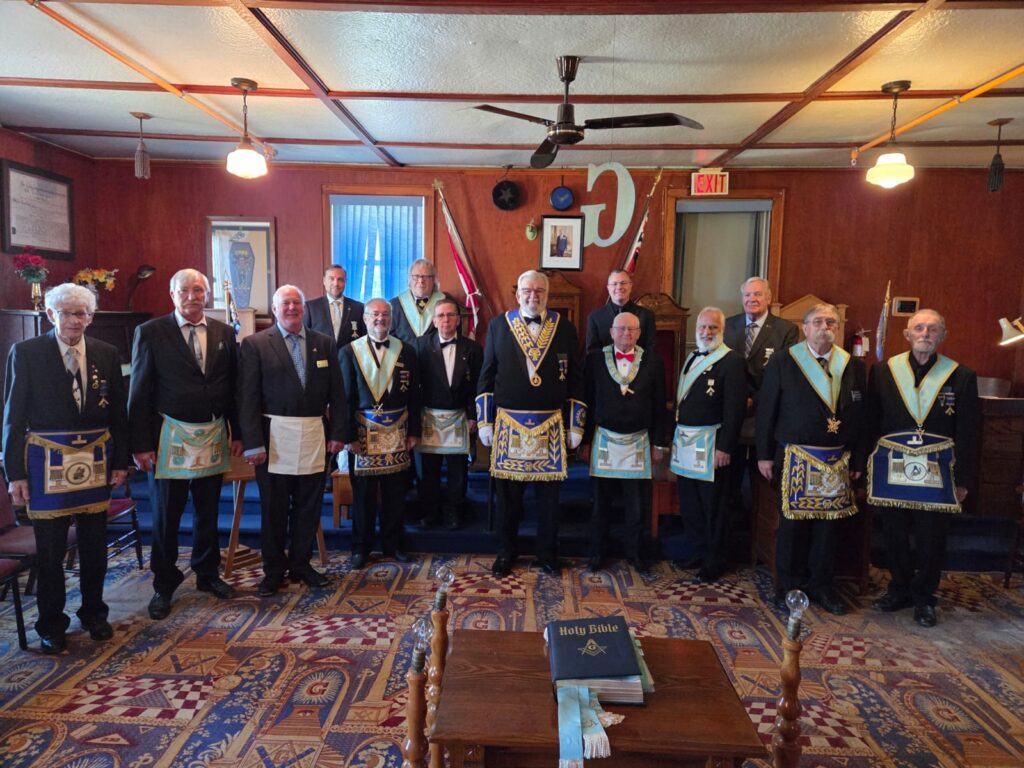
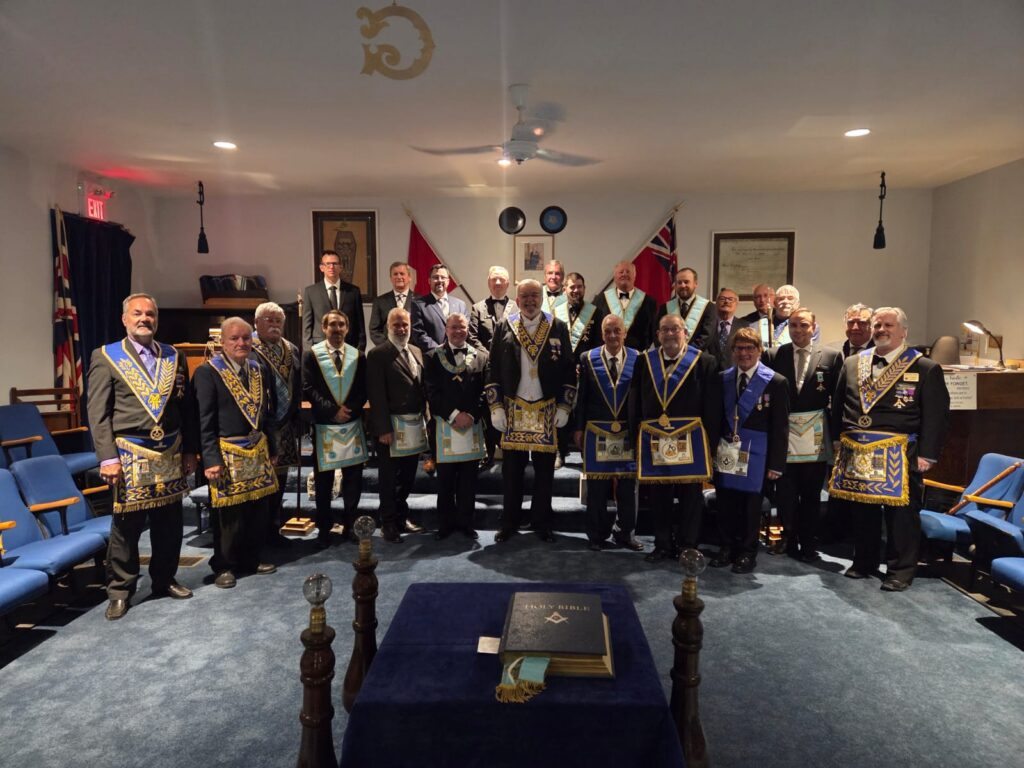
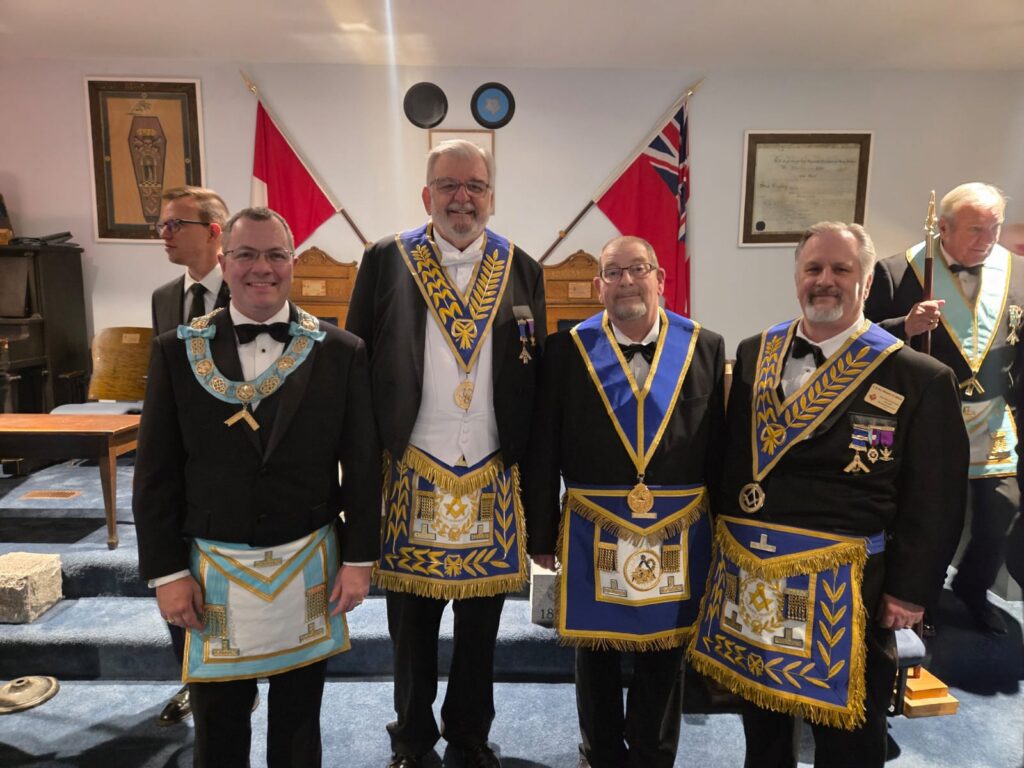
Brethren at Algonquin Lodge’s September meeting
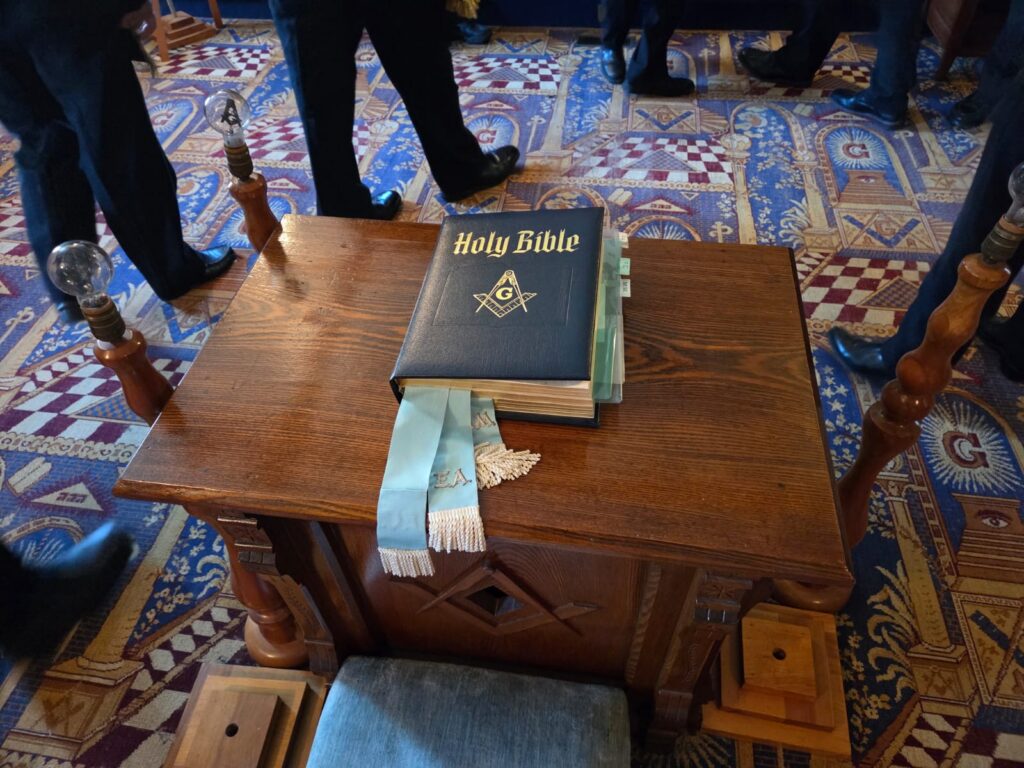
The altar at Algonquin Lodge

Lodge News

Powassan Lodge September Meeting

September 2026 · In photographs

Updated September 25, 2026

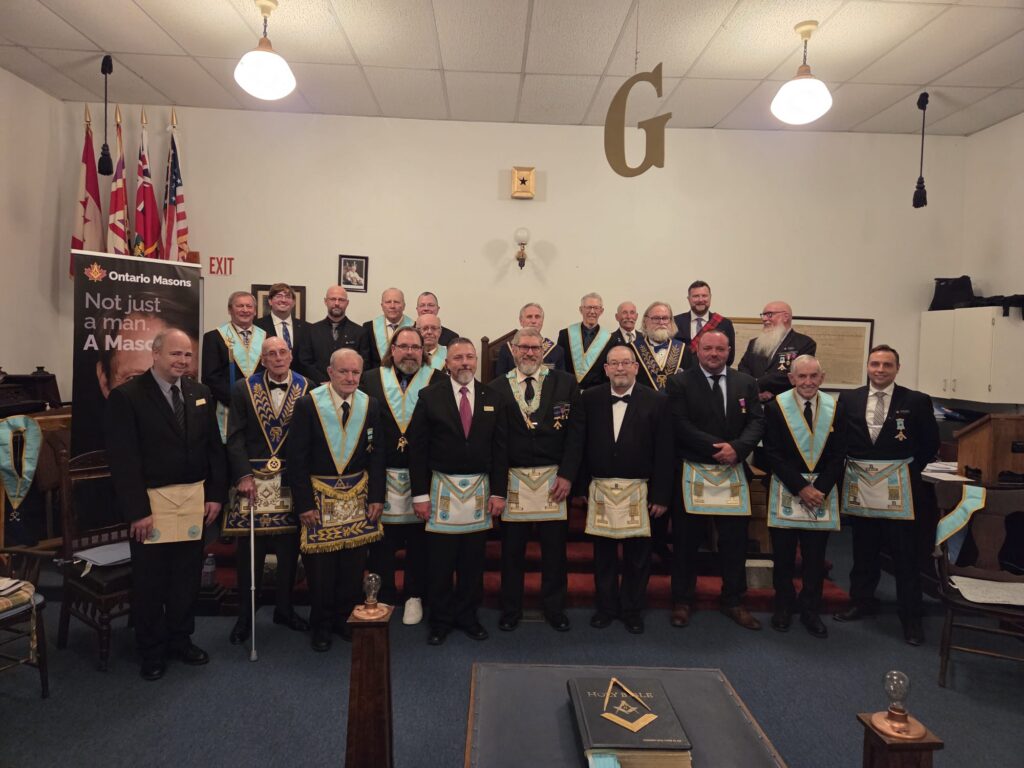
Group photograph at Powassan Lodge’s September meeting
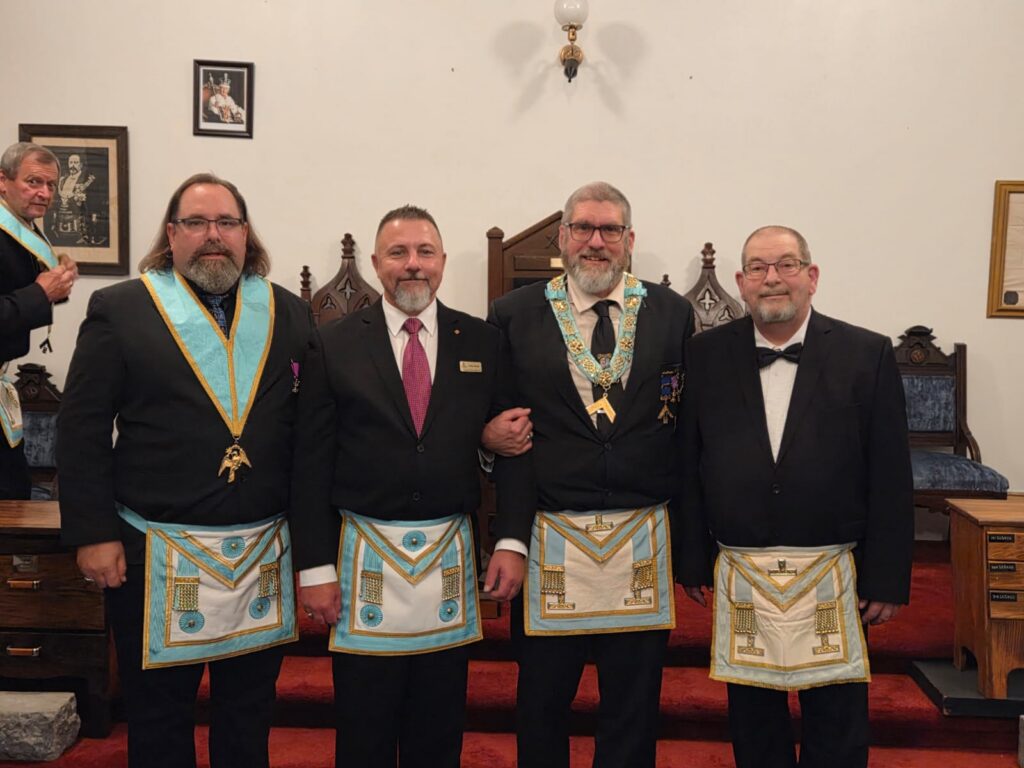
Brethren gathered at Powassan Lodge’s September meeting
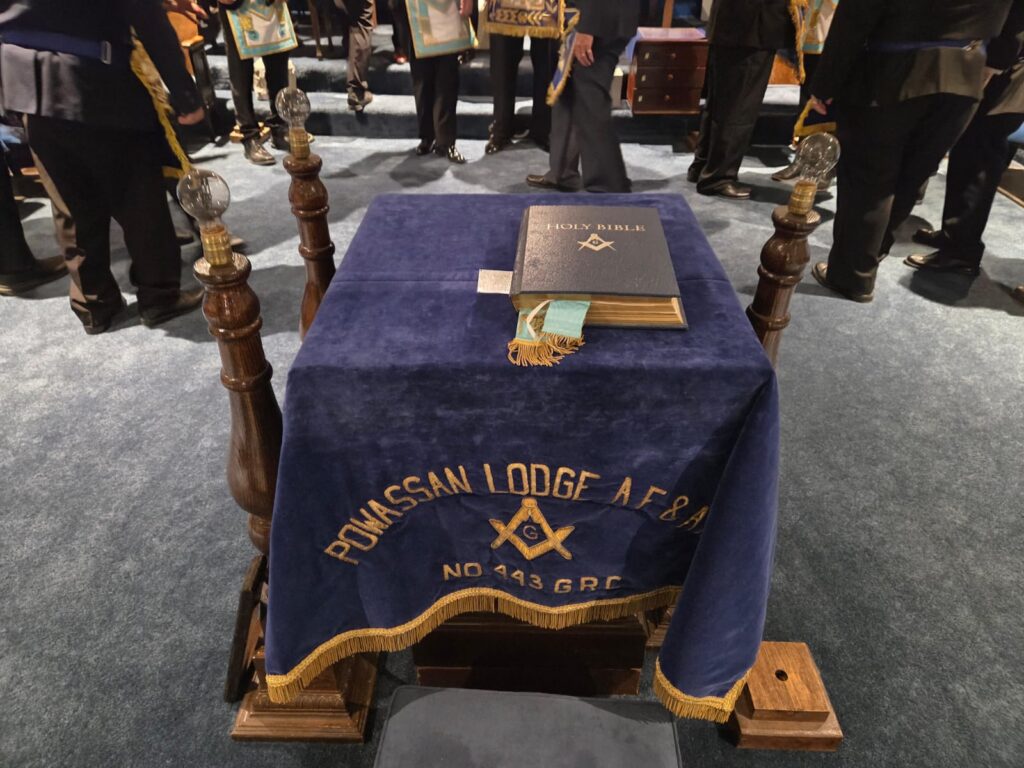
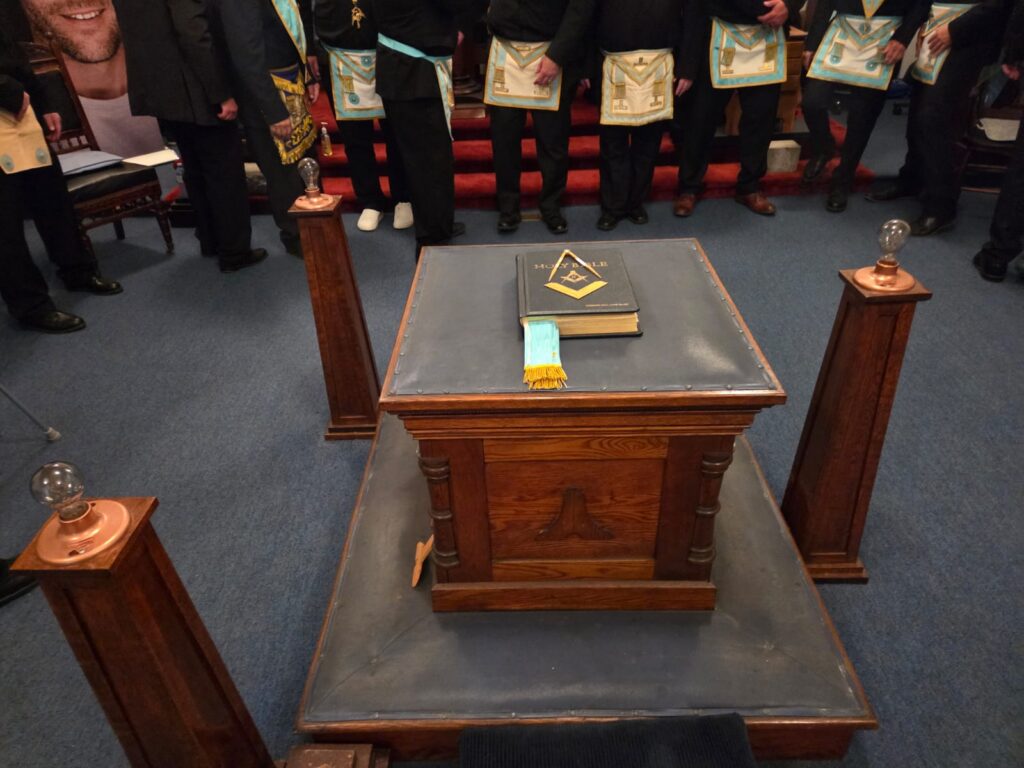
The altar at Powassan Lodge

Lodge News

Sturgeon Falls Lodge No. 447 Draw Night September Meeting

September 2026 · In photographs

Updated September 25, 2026

Group photograph at Sturgeon Falls Lodge No. 447’s September Draw Night meeting
Brethren at Sturgeon Falls Lodge No. 447’s September Draw Night meeting
The altar at Sturgeon Falls Lodge No. 447

Masonic Education

Talk Is Cheap

A Fellowcraft Reflection on Words, Work and Worth

Updated September 25, 2026

There’s an old expression I find myself using fairly often:

Talk is cheap.

Usually I mean it with a bit of impatience. Promises are easy. Opinions are easy. Telling everyone what ought to be done is easy.

The harder question is:

What have you done?

Reading the Fellowcraft section of Morals and Dogma for the 21st Century, I was struck by how closely its argument echoes that simple expression.

The language is more severe, but the principle is familiar. A man can sound wise without actually being wise. He can be eloquent, confident and persuasive while producing very little of consequence.

Words aren’t work.

That should mean something to Masons.

We belong to an institution full of words. We memorize them, preserve them and deliver them with care. Some of our ceremonial language is genuinely beautiful.

But an obligation beautifully recited and poorly lived is still poorly lived.

A lesson perfectly memorized and never practised is just a performance.

Talk is cheap. The work is dear.

And we know what the work looks like.

It’s usually not glamorous. It’s the Brother practising his piece in the car because he doesn’t want to let the candidate down. It’s the Past Master patiently teaching a younger Mason something he could have done himself in five minutes. It’s the guy stacking the chairs while somebody else explains how the chairs really ought to be stacked.

That distinction matters when we start talking about responsibility.

Who should get it?

The Fellowcraft passage is unapologetically about merit. Honour and office shouldn’t simply become prizes for the person who wants them badly enough, asks often enough, or waits long enough.

The Charges of a Freemason are remarkably blunt:

“All preferment among Masons is grounded upon real worth and personal merit only…”

It continues by saying that a Master or Warden isn’t chosen by seniority, but for merit.

That’s quite a standard.

Not:

How long have you been here?

Not:

What titles have you accumulated?

Not even:

How badly do you want the office?

But:

What have you shown yourself capable of doing?

The office doesn’t make the man capable.

Ideally, the work he’s done before getting there tells us whether he’s becoming capable of carrying it.

That’s one of the great values of the progressive line when it works properly. You watch. You help. You practise. You take on more responsibility. You screw something up. Somebody helps you fix it. Then you try again.

You learn to lead by first learning to work.

Masonry itself is structured around proving rather than proclaiming. A candidate doesn’t simply announce that he possesses the necessary qualifications. He’s examined. Advancement comes with expectations of proficiency.

Even our language is dominated by work: labour, tools, building, craftsmanship, improvement.

So Masons, of all people, should probably be suspicious when words start standing in for work.

The same goes for rank.

Titles, degrees, jewels and offices may tell us where a Brother has been. They don’t necessarily tell us what he contributes now.

A man can have an impressive collection of distinctions and still leave the important work to somebody else.

Another may carry very little ornament and quietly sustain his Lodge year after year.

One is easier to notice.

The other is often harder to replace.

So maybe the better question isn’t:

What have you attained?

It’s:

What are you doing with it?

The Fellowcraft passage takes this same concern beyond the Lodge and into public life.

A polished speaker may be wise. A charismatic man may be competent. A confident man may possess excellent judgment.

But none of those things proves the others.

And in a free society, some responsibility rests with the people doing the choosing.

Democracy doesn’t guarantee wisdom.

It guarantees participation.

If we reward spectacle, we’ll get spectacle. If we reward outrage, somebody will happily supply it. If we stop asking whether a person actually possesses the knowledge, temperament, integrity and ability the work requires, we shouldn’t be surprised when appearances start mattering more than substance.

But we don’t need to look very far away to apply that lesson.

We can bring it right back into the Lodge.

Do we favour substance over performance?

Competence over confidence?

Character over charisma?

Service over self-promotion?

Do we notice the Brother quietly doing the work, or mostly the man talking about what somebody else ought to be doing?

There’s a phrase in the Fellowcraft passage that, to me, reduces the whole argument to four words:

“The tools to the workmen!”

That’s it.

Not the loudest man.

Not the most entertaining man.

Not the man who keeps insisting that he deserves the tool.

The workman.

The man who has prepared himself for the work.

There is, however, a trap here.

It’s very easy to read an article like this and immediately start thinking of other people.

We all know the Brother who talks too much. We can all think of somebody whose ambition got ahead of his ability. Vanity is remarkably easy to spot when it belongs to somebody else.

We could probably finish this article with a nice little list of Brothers who really ought to read it.

But that rather misses the point.

Because criticizing somebody else for failing to do the work is also, conveniently enough, talk.

Eventually the question turns around.

Have I learned?

Have I prepared?

Have I made myself useful?

When I saw work that needed doing, did I do any of it?

Have the titles I’ve received changed what I contribute, or merely what I’m called?

That, to me, is where the lesson becomes much more interesting.

Good judgment asks us to look past appearances.

Past eloquence.

Past confidence.

Past spectacle.

Past titles and distinctions.

Past the man who keeps telling us what he is.

And toward the quieter evidence of what he’s actually done.

Talk is cheap.

The work is dear.

The tools to the workmen.

The question isn’t only whether we’ve learned to recognize them.

It’s whether, when the tools are handed out, we’ve done enough work to deserve one.

W. Bro. Thomas Brown

District Secretary

Nipissing–Muskoka District

Source Note:

This reflection was inspired by the discussion of speech, merit, public service and republican government in Chapter 2, “The Fellowcraft,” of Morals and Dogma for the 21st Century, particularly pp. 36–37 of the edition consulted. It also draws upon Part VI, “The Charges of a Freemason,” particularly Section IV, “Of Masters, Wardens, Fellows and Apprentices,” pp. 169–170 of the edition consulted.

Editorial Note:

The author used artificial intelligence as an editorial aid in developing and refining this article. The final text was reviewed and approved by the author.

Masonic Education

When the District Gathers

Rediscovering the Meaning of Divine Service

Updated September 25, 2026

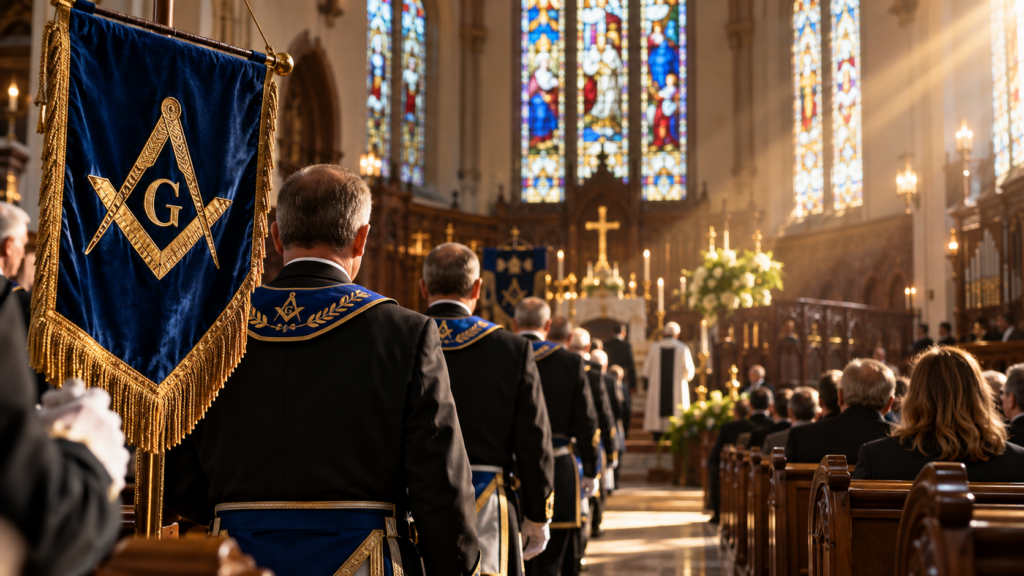
Masonic procession with a blue and gold banner in a church with stained-glass windows.

There are certain Masonic traditions whose significance can become obscured by their familiarity.

They appear on our calendars. They are announced in Lodge. They have been observed by generations before us, and so we continue to observe them. Yet occasionally it is worth asking a deceptively simple question:

Why?

The District Divine Service is one such tradition.

At first glance, it can appear to be one of the quieter occasions in the Masonic year. Brethren assemble, often accompanied by their families. They enter a place of worship. There are prayers, readings and music. Perhaps there is a procession, an offering for charity and fellowship afterward.

Then everyone returns home.

But viewed through the history, symbolism and philosophy of the Craft, something considerably deeper is taking place.

For a brief moment, Freemasonry steps outside the Lodge room and asks us to contemplate whether the lessons we so carefully preserve within it have followed us through the door.

An Old Tradition

The relationship between Freemasonry and public Divine Service reaches far into the history of the Craft.

Nineteenth-century Masonic records contain numerous accounts of Brethren assembling, processing together and attending worship. An 1855 account describes Freemasons gathering for St. John the Evangelist before proceeding together to Divine Service. By the Victorian period, similar services and public Masonic church processions were sufficiently established to appear regularly in contemporary Masonic publications.

There is an especially interesting Canadian connection.

In 1891, during the Grand Mastership of M.W. Bro. John Ross Robertson, contemporary Masonic reporting recorded an initiative setting aside a day upon which Canadian Lodges might assemble for Divine Service. One such gathering brought approximately 130 Brethren from several communities together in procession to a Presbyterian church.

For us, the date is striking.

1891.

The following year, in 1892, the northern Lodges separated from Georgian District and Nipissing District No. 18 was created—the historical ancestor of what eventually became our present Nipissing Muskoka District.

In other words, the tradition of organized Divine Service in Ontario belongs to essentially the same Masonic world from which our District itself emerged.

More than 130 years later, we remain its custodians.

But longevity alone does not explain why a tradition deserves to survive.

Its meaning does.

Freemasonry Is Not a Religion

To understand Divine Service properly, an important distinction must first be made.

Freemasonry is not a religion, nor does it attempt to replace one.

The Craft brings together men who may differ considerably in their particular religious beliefs while recognizing a common reverence for the Supreme Being. Masonry provides symbols and moral instruction; it does not prescribe theology.

That makes the Divine Service particularly interesting.

Inside the Lodge, references to the Great Architect of the Universe surround us.

The Volume of the Sacred Law rests open upon the altar.

Our work begins and ends with prayer.

Candidates are repeatedly reminded that their obligations ultimately exist beneath an authority greater than themselves.

Light becomes a metaphor.

Building becomes a metaphor.

The working tools become instruments of moral instruction.

Even time itself becomes a lesson.

Yet repetition carries a danger.

The most profound words can eventually become familiar enough that we cease to hear them.

The Divine Service interrupts that familiarity.

For a brief period, the machinery of Masonry stops.

No degree is being conferred.

No minutes are being approved.

No committee is reporting.

No ritualist is correcting a word.

No business is being conducted.

Instead, the Mason is given an opportunity simply to reflect upon the source and purpose of the principles he professes.

There is something remarkably humble about that.

Masonry deliberately places itself somewhere other than the centre.

What Are We Actually Building?

Perhaps this is where the Divine Service reaches most deeply into Masonic symbolism.

We spend an extraordinary amount of time talking about building.

We are given working tools.

We speak of foundations.

We contemplate rough and perfect ashlar.

We are encouraged to erect a spiritual temple within ourselves.

The language of architecture permeates the Craft.

But eventually every Mason must confront the question hidden beneath all of that symbolism:

What exactly am I building?

If Brotherly Love exists only within the words of our ritual, we have missed something.

If Relief exists only when the charity committee reports, we have missed something.

If Truth is something beautifully recited but selectively practised, we have missed something.

If the lessons of the working tools disappear when the apron comes off, then we have preserved the symbolism while losing its purpose.

The Divine Service quietly asks us to examine the distance between what we profess and how we live.

Brotherly Love must eventually become relationship.

Relief must become generosity.

Truth must become character.

Faith must become humility.

And the working tools must eventually become behaviour.

Otherwise, we risk becoming excellent custodians of ritual without becoming better men because of it.

Why the District Gathers

There is also significance in the fact that this is a District Divine Service.

Every Mason develops an attachment to his Lodge.

It is his Masonic home. It is where he entered the Craft, learned the ritual, discovered friendships and accumulated memories.

But no Lodge is Masonry itself.

The District reminds us of that.

This carries particular meaning in Nipissing Muskoka.

Our Masonic geography is enormous. Travelling between Lodges can require hours rather than minutes. Historically, those distances helped shape, divide and eventually reunite the Masonic districts of Northern Ontario.

Nipissing District was created in 1892. Muskoka later developed separately. Boundaries shifted again over succeeding generations until, in 2014, Nipissing East and Muskoka–Parry Sound were brought together as the present Nipissing Muskoka District.

Ours is therefore, in a very literal sense, a history of distance being overcome.

The Divine Service expresses that same idea on a human scale.

For an hour, there need not be a Powassan Mason, a Strong Mason, a Muskoka Mason or a Nipissing Mason.

There are simply Brethren.

The newest Entered Apprentice and the senior Right Worshipful Brother encounter the same questions of gratitude, mortality, obligation and purpose.

Office becomes temporary.

Rank becomes comparatively small.

The individual Lodge becomes part of something larger.

And perhaps that is exactly the reminder a District gathering ought to provide.

Beyond the Tiled Door

There is another important difference between Divine Service and most of our Masonic activity.

It can be shared.

Our families experience a curious side of Freemasonry.

They hear about Lodge nights, practices, installations, banquets, official visits, meetings and road trips.

They accommodate the evenings away.

They hear the names of Brethren they may never have met.

They see the tuxedo come out of the closet and the regalia case disappear through the front door.

Yet much of the actual experience of Lodge necessarily remains ours.

The Divine Service changes that relationship.

A wife can sit beside her husband.

A child can see his father among his Brothers.

A widow can stand among men who remember her husband.

Families can encounter the fraternity not as something that takes their loved one away for another evening, but as a community to which they, too, are connected.

That deserves greater consideration than we sometimes give it.

A Mason does not exist independently of his family.

Whatever virtues the Craft succeeds in developing within him should ultimately be most visible to the people who know him without his apron.

Indeed, they may be our most honest judges.

Masonry Seen Rather Than Explained

Historically, Divine Services also provided something Freemasonry occasionally struggles to achieve today:

public visibility without self-promotion.

The Brethren simply appeared together in their community.

There was no membership campaign.

No explanation of secrets.

No attempt to manufacture mystery.

People saw the men.

They saw their families.

They saw their reverence.

They saw their charitable contribution.

They saw how they conducted themselves.

And from those things they could form an impression of what Masonry meant.

There is a lesson in that for the modern Craft.

Perhaps the strongest explanation of Freemasonry has never been the one we give.

Perhaps it is the one people observe.

A community should not need a brochure to discover whether Freemasonry produces good men.

It should be able to look at its Masons.

The Empty Chairs

There is another presence at every District gathering that cannot be listed in the programme.

The absent Brethren.

Every Lodge contains their memory.

There are chairs once occupied by men whose voices newer members never heard.

Names appear on Past Masters' boards that gradually move from personal memory into Lodge history.

Photographs age.

Stories are passed from one generation to another.

Eventually, a Brother who seemed inseparable from his Lodge becomes part of its story.

And still the Lodge opens.

The gavel sounds.

The Volume of the Sacred Law is opened.

Candidates enter.

New friendships form.

Another generation assumes responsibility for something it did not create and cannot permanently possess.

The Divine Service sits naturally within this cycle because Freemasonry has never been afraid to remind a man of his mortality.

Not to diminish life.

To give it urgency.

Every office we hold is temporary.

Every chair we occupy will eventually belong to another.

Every Lodge we inherit was built by men we cannot repay.

Our task is simply to leave something worthy for those who follow.

That is stewardship.

Traditions Must Earn Their Survival

There is, however, a warning hidden within the history of Divine Service.

Traditions do not survive merely because they are old.

Across the jurisdiction, participation in Divine Services has risen and fallen. Some Districts have altered their format. Others have temporarily discontinued them when attendance diminished. In some places, the tradition has subsequently returned.

That tells us something important.

If the only explanation we can offer for Divine Service is—

"We have one because we have always had one"—

then eventually we probably will not have one.

Tradition without understanding becomes obligation.

Obligation without meaning becomes inconvenience.

And inconvenience eventually disappears from the calendar.

Our responsibility, therefore, is not simply to preserve Masonic traditions.

It is to continually rediscover why they were worth preserving in the first place.

Brotherly Love. Relief. Truth.

Look closely enough at Divine Service and almost every major dimension of the Craft appears within it.

Brotherly Love is present when Lodges gather without distinction.

Relief appears when gratitude becomes generosity toward others.

Truth appears in the uncomfortable examination of ourselves.

Faith reminds us that Masonry is not the highest authority in a Mason's life.

Tolerance allows men of differing traditions to stand respectfully beside one another.

Equality diminishes the importance of rank and office.

Family reminds us where our character matters most.

Community provides the place where our principles become visible.

Remembrance connects us to the Brethren who built before us.

Continuity reminds us that others will build after us.

And humility places the whole institution into perspective.

Perhaps that is why this deceptively simple tradition has endured.

Because for all the complexity we have built around Freemasonry, the Divine Service brings us remarkably close to first principles.

When the District Gathers

Maybe we should stop thinking of Divine Service primarily as another event requiring attendance.

Perhaps a better word is:

Gathering.

Once a year, the District stops doing Masonry long enough to remember why we do Masonry at all.

Brethren gather.

Families gather.

Lodges gather.

Generations gather.

Different traditions stand respectfully beside one another.

The living remember the dead.

And men who spend the rest of the year speaking symbolically about the construction of a spiritual temple are afforded a quiet opportunity to examine the temple they are actually building within themselves.

There is an extraordinary symmetry in our District's story.

The Canadian tradition of annual Masonic Divine Service is documented in 1891.

Nipissing District was constituted in 1892.

More than thirteen decades later, the names have changed.

The District boundaries have changed.

The communities have changed.

The roads between our Lodges have changed.

Every Brother who stood in those early gatherings has laid down his working tools.

Yet the fundamental question remains remarkably unchanged:

What are we doing with the Light we have been given?

Perhaps that is the real purpose of the District Divine Service.

Not simply worship.

Not simply tradition.

Not simply fellowship.

But remembrance.

A reminder that the purpose of the Craft was never merely to preserve Freemasonry for another generation.

It was to allow its teachings to preserve something worthwhile within us.

Something carried home to our families.

Something extended toward a Brother.

Something given freely to our communities.

Something visible in the way we conduct ourselves when no apron identifies us as Masons.

And, eventually, something left behind for Brethren we will never have the privilege of meeting.

The ritual teaches us what kind of men we ought to become.

The Divine Service gives us a moment to ask whether we are becoming them.
History & Archives

Help Build the District’s Living Archive

A photograph becomes a lasting record when its people, place, date and source travel with it.

Updated September 25, 2026

A Lodge photograph, a past Roundtable, a programme or a handwritten recollection can preserve a part of district history that would otherwise be difficult to recover. The most useful contributions combine the item itself with enough context for another reader to understand it.

Start with what you know

  • Identify the item: give it a clear title and explain the event or occasion.
  • Name the people and place: include the Lodge and identify people from left to right where possible.
  • Record the date honestly: distinguish an exact date from an estimate such as “circa 1975.”
  • Keep the source attached: note who supplied the item and where the original is held.
  • Explain publication permission: identify the photographer or rights holder where known, and whether permission has been obtained.

Preserve the evidence

Keep the original file or document. When making a scan or photograph, include the full image and any writing on the reverse; captions and annotations can be as useful as the photograph itself. If you enhance a copy for readability, retain the untouched original as well.

Do not turn a likely identification into a certainty. “Possibly” and “date unknown” are useful descriptions when they reflect the evidence. A future reader may recognize the person or occasion and help complete the record.

Share a story, or help identify one

Use the district contact page to offer material or a correction. Tell the editorial team what you hold and the context you can provide. Keep private contact details and sensitive personal information out of the public description. The goal is a record that is accurate, understandable and respectful of the people it represents.

Community News / Events & Visits

Plan Ahead: 2027 Lodge Installation Dates

Eight Lodge installation dates from January through June 2027.

Updated September 28, 2026

The district calendar currently lists eight Lodge installations for 2027. This planning guide brings the dates together so members can look ahead, while the individual event pages remain the place to check later changes and attendance information.

January installations

  • Tuesday, January 5 — Muskoka Lodge No. 360. Event details.
  • Thursday, January 14 — Sturgeon Falls Lodge No. 447. Regular meeting at 7:30 p.m. Event details.

June installations

Around the district

Dates for your diary

October 20 – December 3, 2026 · 45-day calendar

Automatically updated from published district website events. Check the linked listing before travelling. Times use the event’s local timezone.

  1. Friend-to-Friend Evening

    Wed, Oct 21, 2026 · 7:00 pm – 8:00 pm (EDT)

    North Bay Nipissing Lodge No. 420 · 183 First Avenue West, North Bay

  2. District Association Meeting — Strong Lodge

    Thu, Oct 22, 2026 · 7:00 pm – 8:30 pm (EDT)

    Strong Lodge No. 423 · 38 Union St, Strong

  3. Official Visit & Travelling Gavel: Strong Lodge No. 423

    Tue, Nov 10, 2026 · 7:30 pm – 10:30 pm (EST)

    Strong Lodge No. 423 · 38 Union St, Strong

  4. Official Visit & Travelling Gavel: Corona Lodge No. 454

    Thu, Dec 3, 2026 · 8:00 pm – 11:00 pm (EST)

    Corona Lodge No. 454 · 26 Copeland Street, Burk's Falls

Stay connected

Get The Roundtable by email

Join the monthly newsletter distribution list for District news, Lodge stories and upcoming events.

You can request removal from the list at any time. Read our privacy policy.