There are certain Masonic traditions whose significance can become obscured by their familiarity.
They appear on our calendars. They are announced in Lodge. They have been observed by generations before us, and so we continue to observe them. Yet occasionally it is worth asking a deceptively simple question:
Why?
The District Divine Service is one such tradition.
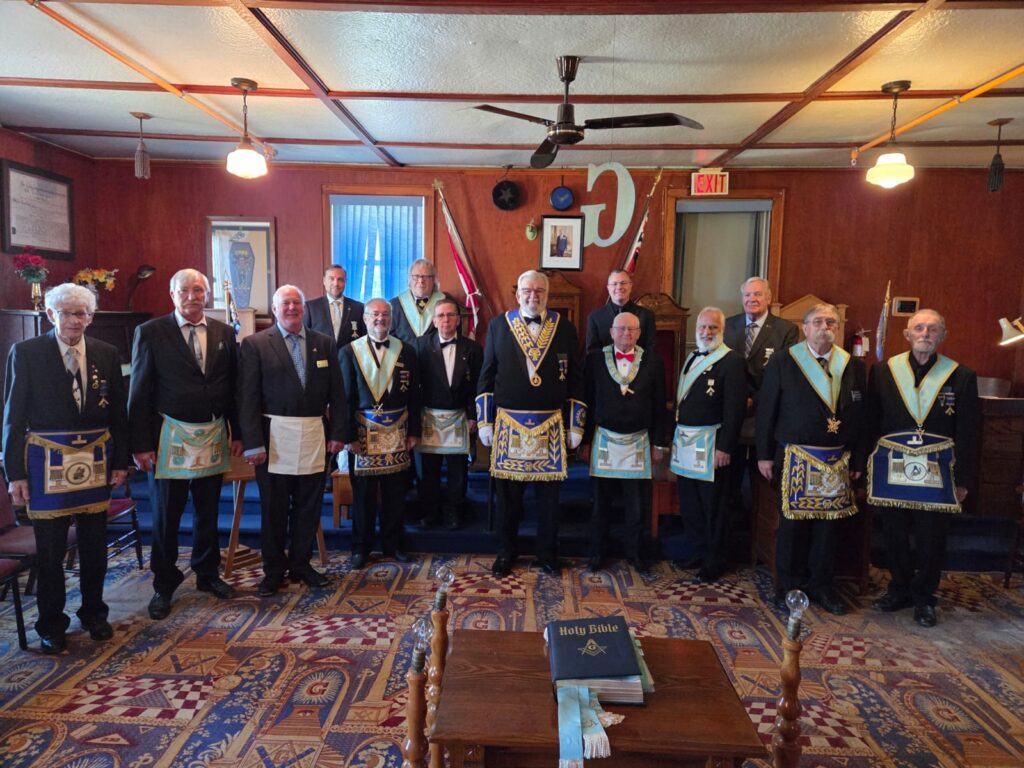
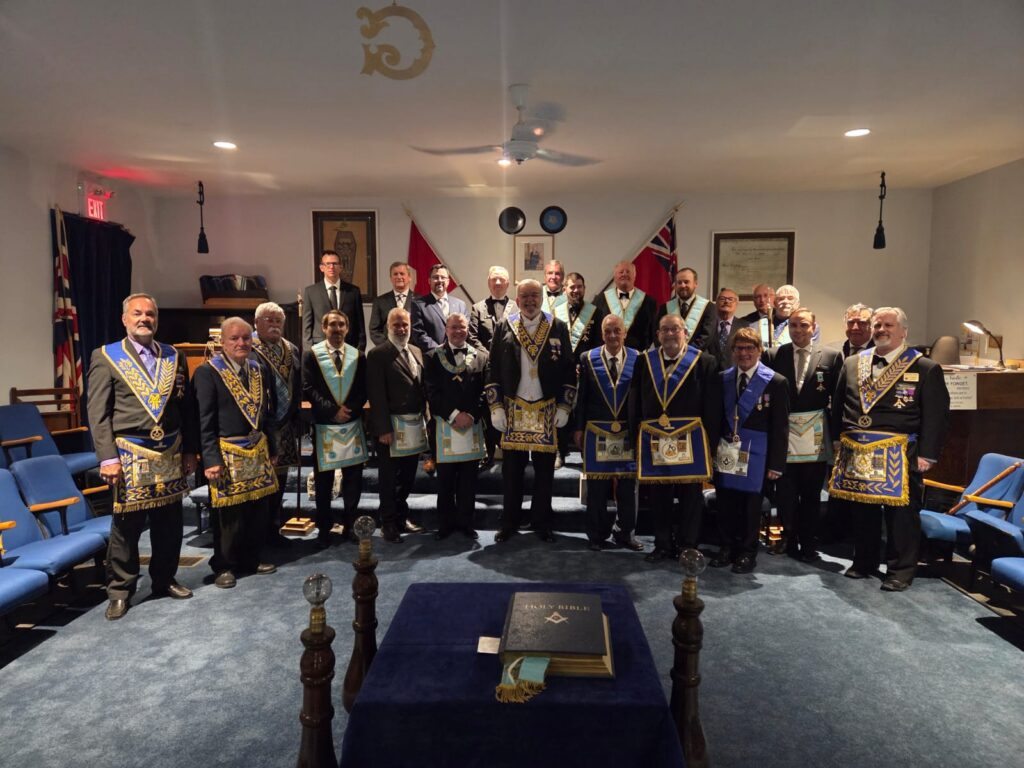
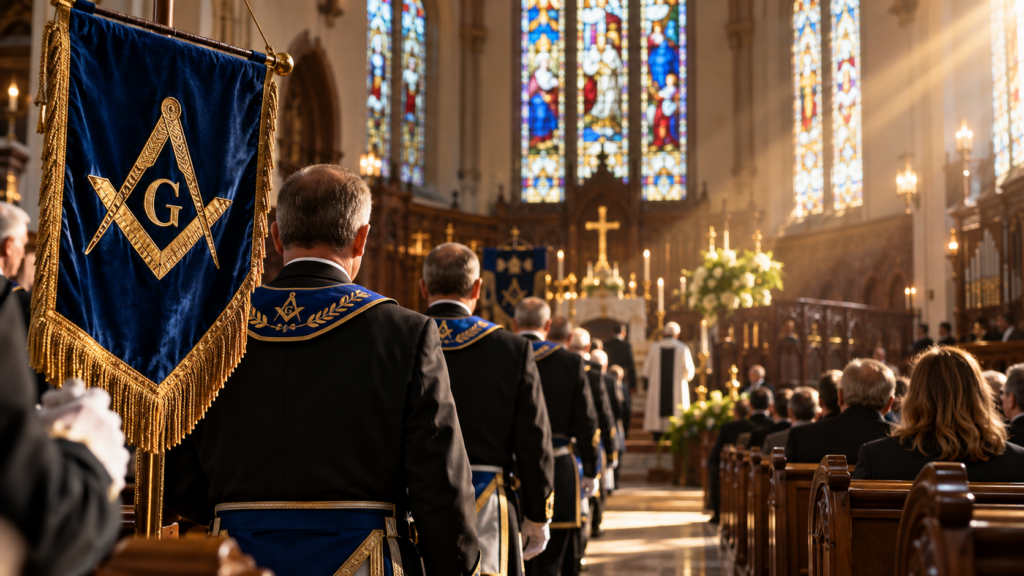
At first glance, it can appear to be one of the quieter occasions in the Masonic year. Brethren assemble, often accompanied by their families. They enter a place of worship. There are prayers, readings and music. Perhaps there is a procession, an offering for charity and fellowship afterward.
Then everyone returns home.
But viewed through the history, symbolism and philosophy of the Craft, something considerably deeper is taking place.
For a brief moment, Freemasonry steps outside the Lodge room and asks us to contemplate whether the lessons we so carefully preserve within it have followed us through the door.
An Old Tradition
The relationship between Freemasonry and public Divine Service reaches far into the history of the Craft.
Nineteenth-century Masonic records contain numerous accounts of Brethren assembling, processing together and attending worship. An 1855 account describes Freemasons gathering for St. John the Evangelist before proceeding together to Divine Service. By the Victorian period, similar services and public Masonic church processions were sufficiently established to appear regularly in contemporary Masonic publications.
There is an especially interesting Canadian connection.
In 1891, during the Grand Mastership of M.W. Bro. John Ross Robertson, contemporary Masonic reporting recorded an initiative setting aside a day upon which Canadian Lodges might assemble for Divine Service. One such gathering brought approximately 130 Brethren from several communities together in procession to a Presbyterian church.
For us, the date is striking.
1891.
The following year, in 1892, the northern Lodges separated from Georgian District and Nipissing District No. 18 was created—the historical ancestor of what eventually became our present Nipissing Muskoka District.
In other words, the tradition of organized Divine Service in Ontario belongs to essentially the same Masonic world from which our District itself emerged.
More than 130 years later, we remain its custodians.
But longevity alone does not explain why a tradition deserves to survive.
Its meaning does.
Freemasonry Is Not a Religion
To understand Divine Service properly, an important distinction must first be made.
Freemasonry is not a religion, nor does it attempt to replace one.
The Craft brings together men who may differ considerably in their particular religious beliefs while recognizing a common reverence for the Supreme Being. Masonry provides symbols and moral instruction; it does not prescribe theology.
That makes the Divine Service particularly interesting.
Inside the Lodge, references to the Great Architect of the Universe surround us.
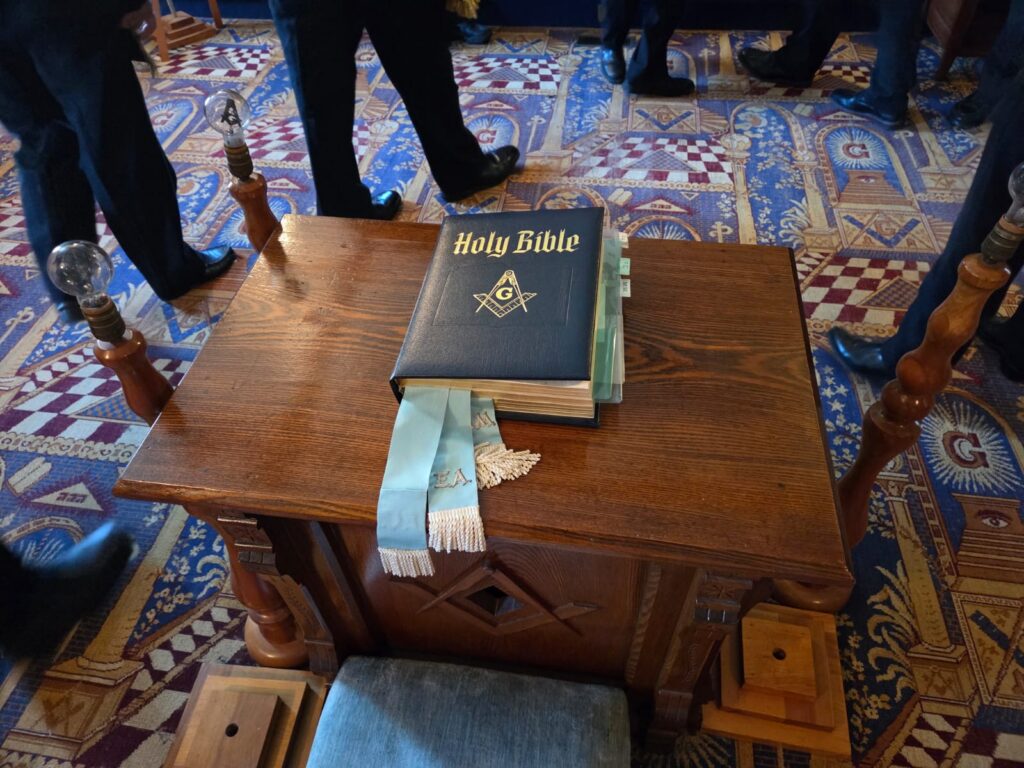
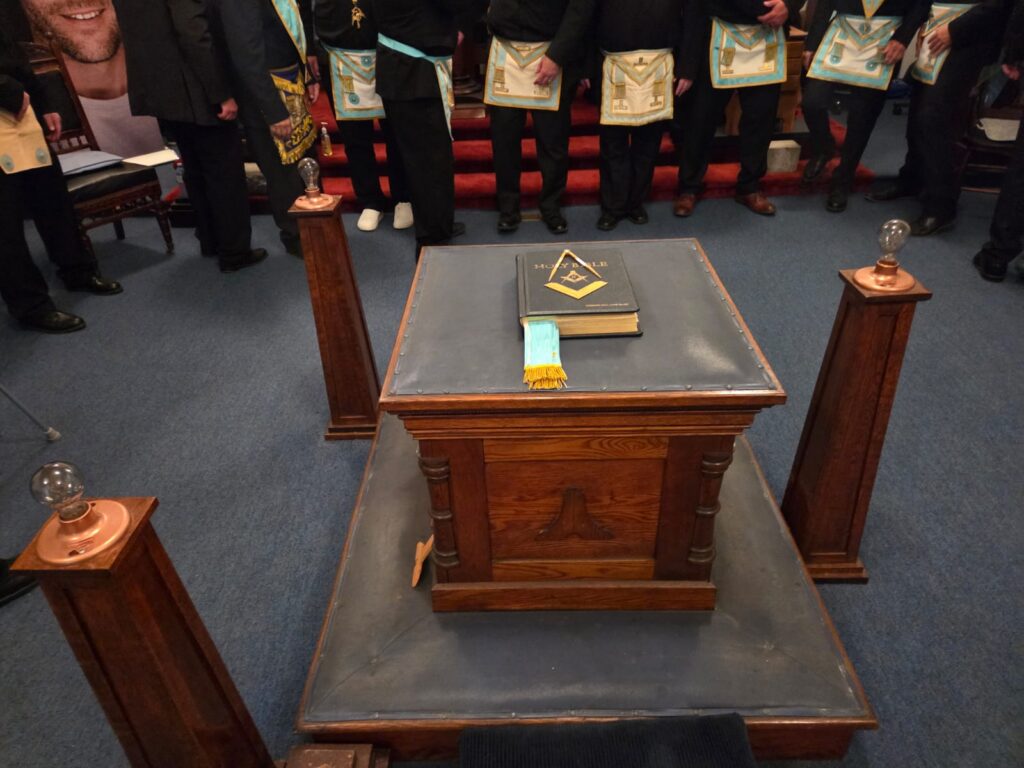
The Volume of the Sacred Law rests open upon the altar.
Our work begins and ends with prayer.
Candidates are repeatedly reminded that their obligations ultimately exist beneath an authority greater than themselves.
Light becomes a metaphor.
Building becomes a metaphor.
The working tools become instruments of moral instruction.
Even time itself becomes a lesson.
Yet repetition carries a danger.
The most profound words can eventually become familiar enough that we cease to hear them.
The Divine Service interrupts that familiarity.
For a brief period, the machinery of Masonry stops.
No degree is being conferred.
No minutes are being approved.
No committee is reporting.
No ritualist is correcting a word.
No business is being conducted.
Instead, the Mason is given an opportunity simply to reflect upon the source and purpose of the principles he professes.
There is something remarkably humble about that.
Masonry deliberately places itself somewhere other than the centre.
What Are We Actually Building?
Perhaps this is where the Divine Service reaches most deeply into Masonic symbolism.
We spend an extraordinary amount of time talking about building.
We are given working tools.
We speak of foundations.
We contemplate rough and perfect ashlar.
We are encouraged to erect a spiritual temple within ourselves.
The language of architecture permeates the Craft.
But eventually every Mason must confront the question hidden beneath all of that symbolism:
What exactly am I building?
If Brotherly Love exists only within the words of our ritual, we have missed something.
If Relief exists only when the charity committee reports, we have missed something.
If Truth is something beautifully recited but selectively practised, we have missed something.
If the lessons of the working tools disappear when the apron comes off, then we have preserved the symbolism while losing its purpose.
The Divine Service quietly asks us to examine the distance between what we profess and how we live.
Brotherly Love must eventually become relationship.
Relief must become generosity.
Truth must become character.
Faith must become humility.
And the working tools must eventually become behaviour.
Otherwise, we risk becoming excellent custodians of ritual without becoming better men because of it.
Why the District Gathers
There is also significance in the fact that this is a District Divine Service.
Every Mason develops an attachment to his Lodge.
It is his Masonic home. It is where he entered the Craft, learned the ritual, discovered friendships and accumulated memories.
But no Lodge is Masonry itself.
The District reminds us of that.
This carries particular meaning in Nipissing Muskoka.
Our Masonic geography is enormous. Travelling between Lodges can require hours rather than minutes. Historically, those distances helped shape, divide and eventually reunite the Masonic districts of Northern Ontario.
Nipissing District was created in 1892. Muskoka later developed separately. Boundaries shifted again over succeeding generations until, in 2014, Nipissing East and Muskoka–Parry Sound were brought together as the present Nipissing Muskoka District.
Ours is therefore, in a very literal sense, a history of distance being overcome.
The Divine Service expresses that same idea on a human scale.
For an hour, there need not be a Powassan Mason, a Strong Mason, a Muskoka Mason or a Nipissing Mason.
There are simply Brethren.
The newest Entered Apprentice and the senior Right Worshipful Brother encounter the same questions of gratitude, mortality, obligation and purpose.
Office becomes temporary.
Rank becomes comparatively small.
The individual Lodge becomes part of something larger.
And perhaps that is exactly the reminder a District gathering ought to provide.
Beyond the Tiled Door
There is another important difference between Divine Service and most of our Masonic activity.
It can be shared.
Our families experience a curious side of Freemasonry.
They hear about Lodge nights, practices, installations, banquets, official visits, meetings and road trips.
They accommodate the evenings away.
They hear the names of Brethren they may never have met.
They see the tuxedo come out of the closet and the regalia case disappear through the front door.
Yet much of the actual experience of Lodge necessarily remains ours.
The Divine Service changes that relationship.
A wife can sit beside her husband.
A child can see his father among his Brothers.
A widow can stand among men who remember her husband.
Families can encounter the fraternity not as something that takes their loved one away for another evening, but as a community to which they, too, are connected.
That deserves greater consideration than we sometimes give it.
A Mason does not exist independently of his family.
Whatever virtues the Craft succeeds in developing within him should ultimately be most visible to the people who know him without his apron.
Indeed, they may be our most honest judges.
Masonry Seen Rather Than Explained
Historically, Divine Services also provided something Freemasonry occasionally struggles to achieve today:
public visibility without self-promotion.
The Brethren simply appeared together in their community.
There was no membership campaign.
No explanation of secrets.
No attempt to manufacture mystery.
People saw the men.
They saw their families.
They saw their reverence.
They saw their charitable contribution.
They saw how they conducted themselves.
And from those things they could form an impression of what Masonry meant.
There is a lesson in that for the modern Craft.
Perhaps the strongest explanation of Freemasonry has never been the one we give.
Perhaps it is the one people observe.
A community should not need a brochure to discover whether Freemasonry produces good men.
It should be able to look at its Masons.
The Empty Chairs
There is another presence at every District gathering that cannot be listed in the programme.
The absent Brethren.
Every Lodge contains their memory.
There are chairs once occupied by men whose voices newer members never heard.
Names appear on Past Masters' boards that gradually move from personal memory into Lodge history.
Photographs age.
Stories are passed from one generation to another.
Eventually, a Brother who seemed inseparable from his Lodge becomes part of its story.
And still the Lodge opens.
The gavel sounds.
The Volume of the Sacred Law is opened.
Candidates enter.
New friendships form.
Another generation assumes responsibility for something it did not create and cannot permanently possess.
The Divine Service sits naturally within this cycle because Freemasonry has never been afraid to remind a man of his mortality.
Not to diminish life.
To give it urgency.
Every office we hold is temporary.
Every chair we occupy will eventually belong to another.
Every Lodge we inherit was built by men we cannot repay.
Our task is simply to leave something worthy for those who follow.
That is stewardship.
Traditions Must Earn Their Survival
There is, however, a warning hidden within the history of Divine Service.
Traditions do not survive merely because they are old.
Across the jurisdiction, participation in Divine Services has risen and fallen. Some Districts have altered their format. Others have temporarily discontinued them when attendance diminished. In some places, the tradition has subsequently returned.
That tells us something important.
If the only explanation we can offer for Divine Service is—
"We have one because we have always had one"—
then eventually we probably will not have one.
Tradition without understanding becomes obligation.
Obligation without meaning becomes inconvenience.
And inconvenience eventually disappears from the calendar.
Our responsibility, therefore, is not simply to preserve Masonic traditions.
It is to continually rediscover why they were worth preserving in the first place.
Brotherly Love. Relief. Truth.
Look closely enough at Divine Service and almost every major dimension of the Craft appears within it.
Brotherly Love is present when Lodges gather without distinction.
Relief appears when gratitude becomes generosity toward others.
Truth appears in the uncomfortable examination of ourselves.
Faith reminds us that Masonry is not the highest authority in a Mason's life.
Tolerance allows men of differing traditions to stand respectfully beside one another.
Equality diminishes the importance of rank and office.
Family reminds us where our character matters most.
Community provides the place where our principles become visible.
Remembrance connects us to the Brethren who built before us.
Continuity reminds us that others will build after us.
And humility places the whole institution into perspective.
Perhaps that is why this deceptively simple tradition has endured.
Because for all the complexity we have built around Freemasonry, the Divine Service brings us remarkably close to first principles.
When the District Gathers
Maybe we should stop thinking of Divine Service primarily as another event requiring attendance.
Perhaps a better word is:
Gathering.
Once a year, the District stops doing Masonry long enough to remember why we do Masonry at all.
Brethren gather.
Families gather.
Lodges gather.
Generations gather.
Different traditions stand respectfully beside one another.
The living remember the dead.
And men who spend the rest of the year speaking symbolically about the construction of a spiritual temple are afforded a quiet opportunity to examine the temple they are actually building within themselves.
There is an extraordinary symmetry in our District's story.
The Canadian tradition of annual Masonic Divine Service is documented in 1891.
Nipissing District was constituted in 1892.
More than thirteen decades later, the names have changed.
The District boundaries have changed.
The communities have changed.
The roads between our Lodges have changed.
Every Brother who stood in those early gatherings has laid down his working tools.
Yet the fundamental question remains remarkably unchanged:
What are we doing with the Light we have been given?
Perhaps that is the real purpose of the District Divine Service.
Not simply worship.
Not simply tradition.
Not simply fellowship.
But remembrance.
A reminder that the purpose of the Craft was never merely to preserve Freemasonry for another generation.
It was to allow its teachings to preserve something worthwhile within us.
Something carried home to our families.
Something extended toward a Brother.
Something given freely to our communities.
Something visible in the way we conduct ourselves when no apron identifies us as Masons.
And, eventually, something left behind for Brethren we will never have the privilege of meeting.
The ritual teaches us what kind of men we ought to become.
The Divine Service gives us a moment to ask whether we are becoming them.